Blue Fruits and Vegetables: The Complete Anthocyanin List
Blue fruits and vegetables get their color from anthocyanins, a family of plant pigments with real research behind them. Truly blue food is rare in nature, which is why a complete list is short enough to learn by heart. This guide covers every food that earns a place on it, with the pigment levels that make each one worth eating.
Most lists of blue fruits and vegetables stop at names. This one adds the data: anthocyanin content per 100 g, key nutrients, serving targets, and the safety notes competitors skip. It also gives blue vegetables a full section of their own, because that is what most readers come looking for.
Key Takeaways
- Blueberries carry about 163 mg of anthocyanins per 100 g, the benchmark every other blue food is measured against.
- A practical target is one serving of blue berries or grapes a day, about 80 to 150 g, plus a blue or purple vegetable several times a week.
- Frozen blueberries keep their anthocyanins well, so fresh and frozen both count.
- Raw elderberries are toxic. Elderberries belong on this list cooked only.
- Blue fruits and vegetables work best as a daily habit: small servings, eaten often, beat occasional large ones.
- The blue color is a pH signal. Acid turns anthocyanins pink-red, and alkaline conditions turn them blue-green.
Blue Fruits
The fruit side of blue fruits and vegetables is where the anthocyanin numbers get serious. Berries lead because the pigment sits in the skin, and small fruit means more skin per bite. Eat these fruits with their skins on whenever they are edible.

| Fruit | Anthocyanins (mg per 100 g) | Key nutrients | Main benefit |
|---|---|---|---|
| Elderberries (cooked) | Up to 1,300 or more | Vitamin C, fiber, iron | Immune support |
| Black currants | About 140 to 265 | Vitamin C, potassium | Heart and eye health |
| Blueberries | About 163 | Vitamin K, manganese, fiber | Brain and memory support |
| Blackberries | About 90 to 210 | Fiber, vitamin C, vitamin K | Blood sugar control |
| Bilberries | Very high, similar range to blueberries | Vitamin C, manganese | Eye health |
| Black grapes and Concord grapes | About 40 to 190 | Resveratrol, potassium | Heart health |
| Acai | Very high | Healthy fats, fiber | Antioxidant support |
| Black plums | About 20 to 80 | Vitamin A, potassium | Skin and bone health |
| Prunes (dried plums) | Concentrated by drying | Fiber, sorbitol, boron | Digestive regularity |
| Purple figs | Moderate, skin only | Fiber, calcium, potassium | Gut and bone health |
Values are approximate. Variety, ripeness, and growing conditions shift anthocyanin levels, sometimes by a lot. Together, these are the blue fruits and vegetables with the strongest pigment data behind them.
Blueberries
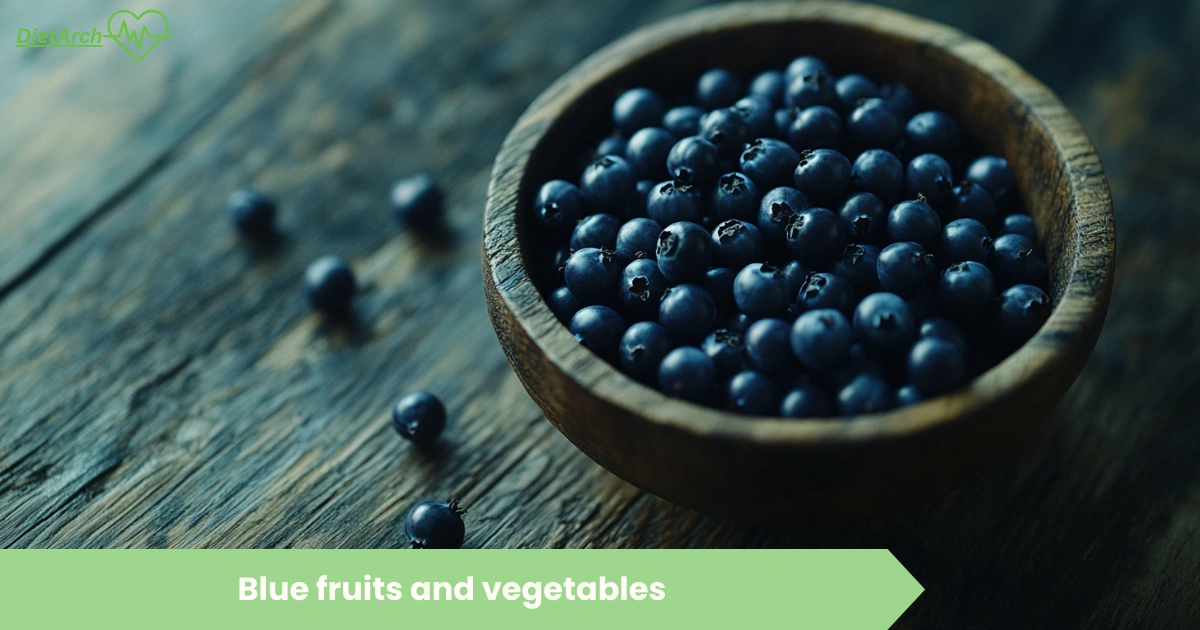
Blueberries are the reference point for blue fruits and vegetables, with about 163 mg of anthocyanins per 100 g. The whitish coating on fresh berries is a natural wax called the bloom. It protects the fruit and signals freshness, so rinse berries right before eating instead of washing the bloom off early.
Blackberries
Blackberries deliver about 90 to 210 mg of anthocyanins per 100 g, plus 5.3 g of fiber in the same serving size (see our guide to high fiber fruits for gut health). Their deep color comes from cyanidin, the same pigment family found in black grapes. They are one of the lowest-sugar berries, which makes them useful far beyond this list.
Black Currants
Black currants are the quiet overachievers of the blue fruits, with anthocyanin levels that can exceed blueberries. They are also one of the richest fruit sources of vitamin C. Their tartness suits jams, syrups, and sauces more than fresh eating.
Black Grapes and Concord Grapes
Black grapes carry anthocyanins plus resveratrol in their skins, a combination few foods match. Concord grapes sit at the higher end of the grape range in skin-heavy preparations like juice. Per 100 g their pigment load is lower than blueberries, but the serving sizes are bigger, so the totals even out.
Elderberries
Elderberries may carry the highest anthocyanin levels of any common fruit, with some analyses above 1,300 mg per 100 g. They also support normal immune function as part of a varied diet. Never eat them raw: raw elderberries contain cyanogenic compounds that cause nausea, and cooking makes them safe.
Bilberries and Huckleberries
Bilberries are the wild European cousins of blueberries, with pigment through the flesh instead of only the skin. Huckleberries are their North American wild relatives. Both are traditional eye-health foods, and both work anywhere blueberries do.
Acai
Acai is a deep purple palm fruit from the Amazon, sold frozen or powdered because the fresh fruit spoils fast. It pairs its anthocyanins with healthy fats, an unusual mix for a fruit. Choose unsweetened acai, because cafe bowls often hide large amounts of added sugar.
Black Plums and Prunes
The old “blue plums” entry on this page is now two accurate entries. Black plums carry their anthocyanins in the skin, so eat them unpeeled. Prunes are dried plums, and drying concentrates both the pigment and the fiber, which is why prunes are the classic digestive fruit.
Purple Figs
Purple and black figs concentrate their anthocyanins in the skin, while the flesh stays pale. They add fiber, calcium, and potassium to the blue fruits group. Fresh figs are fragile and seasonal, so dried figs are the practical year-round option.
Blue Vegetables
Blue vegetables are the underserved half of blue fruits and vegetables, and the half readers search for most. Each vegetable below gets a full entry with nutrients and the cooking method that protects its pigment. Anthocyanins are water-soluble and heat-sensitive, so steaming, roasting, and microwaving beat long boiling almost every time.

| Vegetable | Key nutrients | Best cooking method |
|---|---|---|
| Blue potatoes | Potassium, vitamin C, fiber | Roast or steam, skins on |
| Purple cabbage | Vitamin C, vitamin K, fiber | Raw, quick saute, or fermented |
| Eggplant | Nasunin, fiber, manganese | Roast or grill, skins on |
| Blue corn | Fiber, anthocyanins in the kernel | Tortillas, polenta, whole kernels |
| Purple cauliflower | Vitamin C, vitamin K, folate | Steam or roast briefly |
| Purple sweet potato | Beta carotene plus anthocyanins, fiber | Bake or steam |
| Purple carrots | Anthocyanins plus beta carotene | Raw or lightly roasted |
| Blue tomatoes (Indigo Rose type) | Lycopene plus anthocyanins, vitamin C | Raw in salads |
Blue Potatoes
Blue and purple potatoes look like a novelty and eat like a nutritional upgrade. Per 100 g they run about 70 to 80 kcal and 17 g of carbs, close to white potatoes, but they add anthocyanins white potatoes do not have. Cooked and cooled, they also form resistant starch that feeds gut bacteria.
Purple Cabbage
Purple cabbage is the most affordable anthocyanin source on this page, at about 45 to 113 mg per 100 g. It keeps its pigment best raw or fermented, which is why slaws and kraut are smart formats. One head stores for weeks in the fridge, so it is the easiest blue vegetable to keep on hand.
Eggplant
Eggplant earns its place through nasunin, an anthocyanin concentrated in its purple skin. Peeling eggplant removes the main reason it belongs among blue fruits and vegetables. Roast or grill it with the skin on, as in baba ganoush and ratatouille.
Blue Corn
Blue corn is one of the few genuinely blue foods, colored by anthocyanins in the kernel itself. It becomes blue corn tortillas, chips, and polenta with more fiber than yellow corn versions. Check labels, because some blue corn products are dyed rather than made from real blue corn.
Purple Cauliflower
Purple cauliflower tastes like regular cauliflower with a slightly sweeter edge. Its color fades toward green-blue if it is boiled too long, so steam or roast it briefly. It is a simple swap that puts anthocyanins on plates that would otherwise have none.
Purple Sweet Potato
Purple sweet potatoes, including the Okinawan variety, combine anthocyanins with the fiber and slow carbs sweet potatoes are known for. Their flesh stays vividly purple after baking, unlike most blue produce. They anchor the famous Okinawan diet pattern linked to longevity.
Purple Carrots
Carrots were purple long before they were orange; Dutch growers bred the orange types in the 17th century. Purple carrots deliver anthocyanins on top of the usual beta carotene. Eat them raw or lightly roasted to keep both pigments.
Blue Tomatoes
Blue tomatoes such as Indigo Rose are bred so sunlight turns the shoulders deep blue-purple. Uniquely, they carry lycopene and anthocyanins in the same fruit. Eat them ripe and raw, because their pigment develops on the sun-exposed skin.
Blue vs Purple: What the Color Really Means
Here is the honest answer behind most blue fruits and vegetables: very few are truly blue. Anthocyanins change color with pH, reading red-pink in acid, purple at neutral, and blue-green in alkaline conditions. The same pigment looks purple on a plum and blue on a blueberry because the fruit environments differ.

Purple cabbage juice is the classic kitchen demonstration of this science. Add lemon juice and it turns pink; add a pinch of baking soda solution and it shifts blue-green. Kids remember this experiment long after they forget a definition, which makes it a good first food-science activity.
Blueberries, blue corn, and blue potatoes come closest to true blue. Everything else on this page is honestly blue-purple. That does not make them lesser foods, because the pigment family and the benefits are the same.
What Anthocyanins Do
The research on anthocyanins is promising, and it deserves honest framing rather than miracle language. In trials with older adults, 12 to 16 weeks of daily blueberry intake, roughly 300 to 390 mg of anthocyanins, improved working memory measures and brain activation. That is supportive evidence for brain health, not a guarantee against decline.

For the heart, anthocyanin-rich diets are linked with healthier blood pressure and more flexible blood vessels in large population studies. The pigments appear to support the endothelium, the lining that controls vessel tone. Blue fruits and vegetables also tend to be gentle on blood sugar, since most are high in fiber and modest in sugar for their nutrient load.
One pattern ties the research together: benefits show up with regular eating over weeks, not single servings. A daily handful of berries beats a monthly blueberry binge. Build the habit first and let the compounds accumulate.
How Much to Eat and When They Are in Season
A practical target is one serving of blue berries or grapes a day, about 80 to 150 g. Add a blue or purple vegetable several times a week and you cover the anthocyanin bases without any special shopping. Blue fruits and vegetables also freeze well, so seasonality matters less than it used to.

| Food | Peak season (Northern Hemisphere) | Year-round option |
|---|---|---|
| Blueberries | June to August | Frozen blueberries |
| Blackberries | July to September | Frozen blackberries |
| Black currants | July to August | Currant jam and juice |
| Black grapes | August to October | Raisins and grape juice |
| Elderberries | August to September | Cooked syrups and dried berries |
| Purple cabbage | Autumn to winter | Fresh stores well for weeks |
| Eggplant | July to October | Greenhouse supply year round |
| Blue potatoes | Autumn harvest | Stored potatoes most of the year |
| Purple sweet potato | Autumn harvest | Stored roots most of the year |
| Purple carrots | Summer to autumn | Supermarket supply year round |
Simple Recipes with Blue Produce
These four recipes with blue fruits and vegetables stay simple on purpose. Each one protects the pigment by keeping cooking short or skipping it entirely.
Blueberry Breakfast Smoothie
Blend 150 g of blueberries, half a banana, 150 g of Greek yogurt, and a splash of milk. The banana adds sweetness so no sugar is needed. Serve cold to keep the color bright.
Purple Cabbage Crunch Slaw
Shred half a purple cabbage and toss with grated purple carrot, olive oil, and lemon juice. The lemon keeps the flavor sharp and turns the dressing a vivid pink. Rest it 15 minutes before serving so the cabbage softens slightly.
Roasted Blue Potatoes with Herbs
Cut 500 g of blue potatoes into wedges, toss with olive oil, garlic, and rosemary, and roast at 200 C for 30 to 35 minutes. Keep the skins on for the pigment and fiber. Serve with a pinch of flaky salt.
Black Grape and Fig Salad
Halve 200 g of black grapes and 4 purple figs, then scatter over rocket with crumbled feta. A drizzle of olive oil and balsamic is the whole dressing. Halve grapes fully for young children, because whole grapes are a choking hazard.
Storage and Prep
Store berries dry and unwashed in the fridge, and rinse them right before eating. Washing early strips the blueberry bloom and speeds up mold. Most blue fruits and vegetables keep 3 to 7 days refrigerated, while purple cabbage and roots last for weeks.

Freeze surplus berries on a tray first, then bag them so they stay loose. Frozen blueberries test as rich in anthocyanins as fresh ones, and wild frozen berries can test higher per gram. Thawed berries suit cooking and smoothies better than snacking, since freezing softens their texture.
Cut eggplant and purple potatoes shortly before cooking to limit browning. A squeeze of lemon on cut surfaces slows oxidation. Keep dried prunes and figs in airtight jars away from heat, and they will hold their quality for months.
Nutrition data: USDA FoodData Central.