Fruits That Start with T: The Complete List
Quick answer: the fruits that start with T most people are looking for are tangerine, tomato, tamarillo, tangelo, tamarind, tayberry, tart cherry, and tomatillo. The full list below covers 27 verified fruits, grouped by type, with taste notes and nutrition facts. It is built for quiz answers, school projects, and curious eaters alike.
Shorter lists miss the interesting half of the letter. Fruits that start with T include a berry named after a Scottish river, a Mexican fruit that anchors Christmas punch, and a palm fruit eaten like jelly in South Asia. Every entry here is a real, verifiable fruit, with no padding from renamed cultivars of the same plant.
The Full List at a Glance
Here is every entry on one screen: all 27 fruits that start with T, with category, taste, and origin region.
| Fruit | Category | Taste | Origin region |
|---|---|---|---|
| Tangerine | Citrus | Sweet, mild, easy peel | China, Southeast Asia |
| Tangelo | Citrus | Sweet-tart, juicy | Hybrid, USA |
| Tachibana orange | Citrus | Sour, bitter, aromatic | Japan |
| Temple orange | Citrus | Rich, sweet, spicy notes | Jamaica (tangor hybrid) |
| Tarocco orange | Citrus | Sweet, berry hints | Italy (Sicily) |
| Tahitian lime | Citrus | Sharp, classic lime | Tahiti (Persian lime) |
| Tayberry | Berry | Sweet-tart, aromatic | Scotland |
| Thimbleberry | Berry | Soft, sweet-tart | North America |
| Turkey berry | Berry | Bitter, used cooked | Pantropical |
| Twinberry | Berry | Bitter, not safely edible | North America |
| Tart cherry | Small fruit | Sour, bright | Europe, Asia |
| Tree strawberry | Small fruit | Mildly sweet, grainy | Mediterranean |
| Tamarind | Tropical | Sweet-sour pulp | Africa |
| Tamarillo | Tropical | Sweet-tart, passion fruit meets tomato | Andes, South America |
| Tarap | Tropical | Custard-like, sweet | Borneo |
| Tucuma | Tropical | Nutty, oily, earthy | Amazon |
| Tejocote | Tropical | Apple-like, tart | Mexico |
| Tinda | Tropical (borderline) | Mild, cucumber-like | South Asia |
| Texas persimmon | Exotic | Very sweet when ripe | Texas, Mexico |
| Thorn melon | Tropical | Melon-cucumber, jelly texture | Africa (Kalahari) |
| Totapuri mango | Tropical | Tangy, less sweet | India |
| Toddy palm fruit | Tropical | Jelly-like, translucent, mild | South and Southeast Asia |
| Tuna (prickly pear fruit) | Tropical | Sweet, watermelon-berry | Mexico, Americas |
| Turkish fig | Exotic | Honeyed, jammy | Turkey, Mediterranean |
| Tomato | Tomato family | Savory-sweet | South America |
| Tomatillo | Tomato family | Tart, herbal | Mexico |
| Teardrop tomato | Tomato family | Extra sweet | Modern cultivar |
A printable version of this list, sized A4 with pictures, is the shareable form of this page. Teachers and parents asked for exactly that format in the community threads behind this update. Keep the web version open for the nutrition table and the per-fruit notes.
Citrus Fruits That Start with T
Citrus is the deepest bench among fruits that start with T, with six entries. Most descend from the mandarin family, which is why so many of them peel easily and taste mild. The exceptions, tachibana and Tahitian lime, sit at the sour end.
Tangerine
The tangerine is a mandarin variety named after Tangier, Morocco, the port it shipped from. It peels easily, segments cleanly, and tastes sweeter and less acidic than a standard orange. In Chinese New Year tradition, tangerines symbolize prosperity and luck because of their golden color and a wordplay on luck in Chinese.
Tangelo
A tangelo is a tangerine crossed with a pomelo or grapefruit, and the Minneola is its most famous type. The result is juicy, sweet-tart, and usually loose-skinned like its mandarin parent. The little knob at the stem end is the easiest way to recognize one in a shop.
Tachibana Orange
The tachibana is one of Japan’s two native citrus fruits, and it is more symbol than snack. It tastes sour and bitter, so it is used for zest, liqueurs, and its intense aroma rather than fresh eating. Tachibana trees are culturally protected in Japan and appear on coins and family crests.
Temple Orange
The temple orange is a tangor, a tangerine crossed with a sweet orange, first found in Jamaica. Its flavor is richer and spicier than a standard orange, with a thick, pebbly rind. It peaks in winter and was once considered the finest eating orange in Florida groves.
Tarocco Orange
Tarocco is a Sicilian blood orange, with ruby-streaked flesh and a sweet flavor touched by berry notes. It is widely rated the sweetest of the blood oranges. Its red blush comes from the same anthocyanin pigments found in our guide to blue fruits and vegetables.
Tahitian Lime
The Tahitian lime, also sold as the Persian lime, is the standard seedless lime of supermarkets worldwide. It is sharp, aromatic, and milder than the small key lime. Despite the name, it likely reached Tahiti from earlier plantings elsewhere and traveled onward from there.
Berries and Small Fruits That Start with T
The berry group among fruits that start with T mixes the edible, the cook-first, and the do-not-eat. Read the notes before the names, because this category holds the letter’s one clear safety warning. Two of these fruits are traditional foraged foods, so identification matters.
Tayberry
The tayberry is a Scottish cross between a blackberry and a red raspberry, bred in Dundee. It is longer and softer than both parents, with an aromatic sweet-tart flavor that suits jam and desserts. Its name comes from the River Tay in Scotland, not the Tay Bridge, a correction to the old version of this page.
Thimbleberry
Thimbleberries are soft red berries that grow wild across North America and slip off their core like a thimble. They are too delicate to ship, so almost nobody buys them in a store. Foragers prize them for jam, and the large maple-like leaves are a reliable identification clue.
Turkey Berry
Turkey berry is a small pea-sized fruit used cooked in Thai, Indian, and Caribbean dishes. Raw and in quantity it is bitter and not recommended, because its glycoalkaloid content drops with cooking. In Thai green curry it is a classic ingredient, added for its bitter edge.
Twinberry
Twinberry, a honeysuckle fruit, is on this list for identification, not eating. Its shiny black berries are considered not safely edible and are reported to cause stomach upset. Include it in quizzes if you like, but keep it out of the kitchen.
Tart Cherry
Tart cherries, also called sour cherries, are the pie and preserve cherries, distinct from sweet eating cherries. They carry about 63 kcal and 1.6 g of fiber per 100 g, plus anthocyanins behind their bright red color. Montmorency is the best-known variety and the one used in most tart cherry juice studies.
Tree Strawberry
The tree strawberry is the fruit of the Mediterranean strawberry tree, despite not being a strawberry at all. The round orange-red fruit ripens as the tree flowers, tastes mildly sweet and grainy, and jams well. Eat it ripe, because unripe fruit can cause nausea.
Tropical and Exotic T Fruits
The tropical bench is where fruits that start with T get genuinely exotic. Several of these never reach supermarkets outside their home regions, which is exactly why quiz lists keep missing them. Regional names and uses are included because that is how these fruits are actually searched for.
Tamarind
Tamarind is a pod fruit whose sticky pulp runs sweet and sour at once, the backbone of pad thai sauce, chutneys, and Worcestershire sauce. It has been used in Ayurvedic tradition for digestion and fevers, phrased as traditional use rather than proven treatment. Its name comes from the Arabic for “Indian date,” a nod to its trade history.
Tamarillo
The tamarillo, or tree tomato, is the headline entry most lists include and the old version of this page missed. It tastes like passion fruit crossed with tomato, sweet-tart and spoonable. Halve it, sprinkle a little sugar if you like, and scoop the flesh; the skin is bitter and not eaten.
Tarap
Tarap is a Borneo fruit in the jackfruit family, with custard-like flesh and sweet, melon overtones. The spiky green husk opens to soft white segments eaten fresh. It spoils quickly after opening, which is why it rarely travels beyond Southeast Asian markets.
Tucuma
Tucuma is an Amazonian palm fruit with orange, oily flesh and a nutty, earthy taste. In northern Brazil it is sliced into sandwiches with cheese, a regional classic. Its oil-rich pulp is also pressed for cooking and cosmetics.
Tejocote
Tejocote is a small Mexican hawthorn fruit, apple-like and tart, eaten cooked more often than raw. It is the defining fruit of ponche, the warm Mexican Christmas punch. Candied tejocote and tejocote paste are holiday staples in Mexican markets.
Tinda
Tinda, the Indian round gourd, sits on the fruit-vegetable borderline like the tomato does. Botanically it is a fruit, grown and cooked as a vegetable in South Asian curries. It earns a note here rather than a full ranking, because almost nobody eats it raw or sweet.
Texas Persimmon
Texas persimmon is a small black fruit native to Texas and northern Mexico. Fully ripe, it is very sweet with a prune-like depth, and it stains everything it touches. It was a traditional food and dye source long before it was a forager’s curiosity.
Thorn Melon
Thorn melon, also called kiwano or horned melon, is a spiky orange African fruit with bright green jelly inside. The taste sits between cucumber, melon, and banana, and the texture is all jelly and seeds. Halve it and spoon it, or strain the pulp into drinks.
Totapuri Mango
Totapuri is the one mango entry on this page, a tangy Indian cultivar shaped a little like a parrot’s beak. It is less sweet than dessert mangoes and is preferred for pickles, salads, and juices. Older versions of this list padded the count with two mango cultivars; one honest mango entry is better than two.
Toddy Palm Fruit
The toddy palm, or palmyra, produces translucent jelly-like fruit segments eaten across South and Southeast Asia. They are mild, cooling, and served in drinks and desserts, often over ice. The same palm gives toddy sap, which is where the fruit gets its name.
Tuna (Prickly Pear Fruit)
In Mexico and much of Latin America, the prickly pear cactus fruit is simply called tuna. It tastes sweet, somewhere between watermelon and berries, and comes in red, orange, and green types. Peel it carefully, because the skin carries tiny spines called glochids.
Turkish Fig
Turkish figs are the benchmark eating figs, honeyed and jammy when ripe and widely dried for export. Fresh figs give about 74 kcal and 2.9 g of fiber per 100 g. Turkey produces the majority of the world’s dried figs, so most dried figs you have eaten started here.
The Tomato Family
No group of fruits that start with T causes more arguments than this one. All three entries are botanical fruits that kitchens treat as vegetables. The tamarillo belongs here by family too, and it is covered in the tropical section above.
Tomato
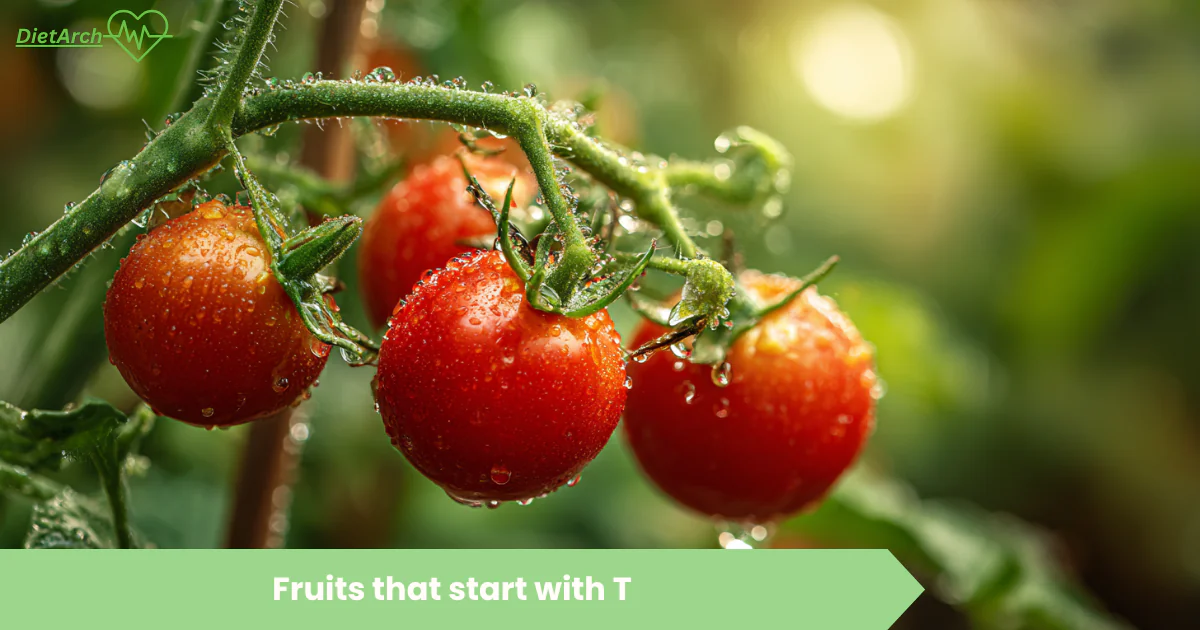
The tomato is botanically a fruit because it develops from the flower’s ovary and carries seeds. Culinarily it is a vegetable, and a famous 1893 US Supreme Court case even taxed it as one. That split identity is why the tomato anchors every fruit-or-vegetable debate, including our cucumber: fruit or vegetable explainer.
Tomatillo
The tomatillo is a tomato relative in a papery husk, tart and herbal rather than sweet. It is the base of salsa verde and is almost always cooked, which mellows its sharpness. Despite the name meaning “little tomato” in Spanish, it is a different species entirely.
Teardrop Tomato
Teardrop tomatoes are small pear-shaped tomatoes bred for sweetness and snacking. They come in red and yellow types and are sweeter than standard cherry tomatoes. Their shape makes them a lunchbox and salad favorite, especially for children.
Nutrition Facts for Common T Fruits
Generic nutrition claims help nobody, so here are USDA-style values per 100 g for the T fruits people actually eat. Values for the exotic entries are not standardized, which is why they are honestly absent rather than invented. These are the numbers behind the fruits that start with T that people eat most often.
| Fruit | Calories | Fiber | Vitamin C | Note |
|---|---|---|---|---|
| Tangerine | 53 kcal | 1.8 g | 26.7 mg | Easy-peel, moderate sugar |
| Tomato | 18 kcal | 1.2 g | 13.7 mg | Lowest calorie fruit on this page |
| Tamarind | 239 kcal | 5.1 g | Low | Fiber leader, but sugar-dense |
| Tamarillo | About 31 kcal | About 3 g | About 29.8 mg | Vitamin C leader among T fruits |
| Tangelo | About 47 kcal | About 1.7 g | About 29 mg | Juice and segments |
| Tomatillo | 32 kcal | 1.9 g | 11.7 mg | Usually eaten cooked |
| Turkish fig (fresh) | 74 kcal | 2.9 g | 2 mg | Best eaten ripe or dried |
| Tart cherries | 63 kcal | 1.6 g | 7 mg | Anthocyanin-rich |
Two patterns stand out. Tamarind leads on fiber but carries the sugar load of a dried fruit, while tamarillo and tangerine lead on vitamin C per bite. Readers watching carbs should note that tamarind is the exception among fruits that start with T, and our ranking of low carb fruits ranked by net carbs shows where citrus and berries land instead.
Recipes with T Fruits
Five simple recipes prove that fruits that start with T are not just quiz answers.
Tamarind Cooler
Stir 2 tablespoons of tamarind paste into a litre of cold water with a little sugar and ice. Add a pinch of salt to round the sourness. It is the fastest introduction to tamarind there is.
Tangerine Spinach Salad
Toss baby spinach with tangerine segments, sliced red onion, and crumbled feta. Dress with olive oil and a squeeze of tangerine juice. The segments should go in last so they stay intact.
Salsa Verde with Tomatillo
Simmer 500 g of husked tomatillos with a small onion and a chili until soft, then blend with coriander and salt. Five minutes of cooking turns the tartness mellow. Serve warm with tortilla chips or over eggs.
Tart Cherry Berry Smoothie
Blend 150 g of tart cherries with half a banana, 150 g of Greek yogurt, and a splash of milk. The cherries bring the brightness, so no added sugar is needed. Frozen cherries work exactly as well as fresh.
Tayberry Jam (Small Batch)
Simmer 500 g of tayberries with 350 g of sugar and a squeeze of lemon for about 15 minutes. Skim, jar hot, and cool. Tayberries set softly, which suits spooning over yogurt as much as toast.
How to Add T Fruits to Your Week
| Day | T fruit | How to use it |
|---|---|---|
| Monday | Tangerine | Snack, whole and portable |
| Tuesday | Tomato | Salad base at lunch |
| Wednesday | Tart cherry | Smoothie after training |
| Thursday | Tomatillo | Salsa verde with dinner |
| Friday | Turkish fig | Dessert with yogurt |
| Saturday | Tamarillo | Spooned fresh with a little sugar |
| Sunday | Cherry tomatoes (teardrop) | Snack plate with cheese |
The snack row on the old version of this plan suggested an apple, which does not start with T and broke the page’s own concept. It is fixed to cherry tomatoes. One of these fruits that start with T a day is an easy pattern for a school project week or a themed menu.
Where to Buy and When They Are in Season
| Fruit | Peak season | Where to buy |
|---|---|---|
| Tangerine | November to January | Any supermarket |
| Tangelo | December to February | Supermarkets, citrus specialists |
| Tomato and teardrop tomato | Summer (greenhouse year round) | Any supermarket |
| Tomatillo | Summer to autumn | Mexican and Latin grocers |
| Tart cherry | June to July | Farmers markets, frozen year round |
| Tamarind | Year round as pods and paste | Asian and Latin grocers |
| Tamarillo | Autumn (imports vary) | Specialty fruit shops |
| Turkish fig | August to September (fresh) | Mediterranean grocers, dried year round |
| Tejocote | November to December | Mexican grocers, often frozen or jarred |
| Tarap, tucuma, toddy palm | Local seasons only | Southeast Asian and Brazilian markets |
Most fruits that start with T are ordinary supermarket stock, which is what makes the letter fun for school projects. The exotic third of the list is a specialty-shop hunt. Frozen and jarred versions of tejocote and tart cherry are legitimate shortcuts, not compromises.
Fun Facts
The tayberry is named after the River Tay in Scotland. An earlier version of this page credited the Tay Bridge, which is the common but wrong version of the story.
Tangerines are given as gifts at Chinese New Year because their golden color and a lucky wordplay in Chinese link them to prosperity. A bowl of them by the door is a wish for wealth in the year ahead.
The United States Supreme Court ruled in 1893 that the tomato is legally a vegetable for tariff purposes, while openly agreeing it is botanically a fruit. Both answers have been official ever since.
Frequently Asked Questions
Author: Sara Ali, nutritionist. This article is general information, not medical advice.