Body Fat Calculator
Body Fat Percentage Calculator
Get an evidence-based estimate and personalized guidance from DietArch
Quick estimate: age, height & weight.
Jackson/Pollock 3-site caliper method.
Simple YMCA tape-measure method.
Your Estimated Body Fat Percentage
0.0%
(0% – 0%)
This body fat calculator estimates your body fat percentage with the same tape measure and formula methods used by the U.S. Navy, sports scientists and clinicians. Enter your measurements once and compare the results across methods instead of trusting a single number.
Four methods run inside the tool: U.S. Navy, CUN-BAE, YMCA and Jackson-Pollock calipers. This guide also prints the Covert Bailey formulas and a BMI based estimate in full, so you can check any result by hand.
How to Use This Calculator
Using this body fat calculator takes less than a minute. Follow the three steps below.
One rule matters more than any other: use the same method, at the same time of day, every time you measure. The accuracy section below explains how far each method can sit from a DEXA scan.
Your Result Explained: Body Fat Categories
A percentage on its own means little until you place it in a category. The table below uses the American Council on Exercise (ACE) categories, the standard most clinicians and coaches work from.
| Category | Men | Women |
|---|---|---|
| Essential fat | 2-5% | 10-13% |
| Athletes | 6-13% | 14-20% |
| Fitness | 14-17% | 21-24% |
| Acceptable | 18-24% | 25-31% |
| Obese | 25% and above | 32% and above |
Essential fat is the minimum your body needs to function, not a target to aim for. The fitness and athletes bands suit most active people, while the acceptable band is where many healthy adults naturally sit.
Women carry more essential fat than men because of reproductive tissue and hormonal needs. That is why every table and every formula in this body fat calculator treats the sexes separately.
Healthy Body Fat Ranges by Age
Body fat rises slowly with age even when body weight stays the same, because muscle mass declines. A result that looks high at 25 can be perfectly healthy at 55.
| Age | Men (healthy range) | Women (healthy range) |
|---|---|---|
| 20-39 | 8-19% | 21-32% |
| 40-59 | 11-21% | 23-33% |
| 60-79 | 13-24% | 24-35% |
Read the two tables together. First find your category in the ACE table, then check whether your result also sits inside the healthy band for your age group.
What Does Each Body Fat Percentage Look Like?
Numbers become easier to judge when you can compare them with real physiques. The visual chart below shows reference builds for men and women from 10% up to 40%.
For men, visible abs usually appear around 10-14%, a fit and lean look sits near 15%, and a softer midsection with little muscle definition is typical around 20-25%. Above 30%, most fat collects around the abdomen.
For women, an athletic build with some ab definition sits around 16-19%, a toned and healthy look around 20-24%, and softer curves around 25-29%. Above 30%, storage increases at the hips, thighs and abdomen.
Fat distribution is genetic, so two people at the same percentage can look different. Use the chart as a sanity check on your body fat calculator result, not as a verdict.
What Is Body Fat Percentage?
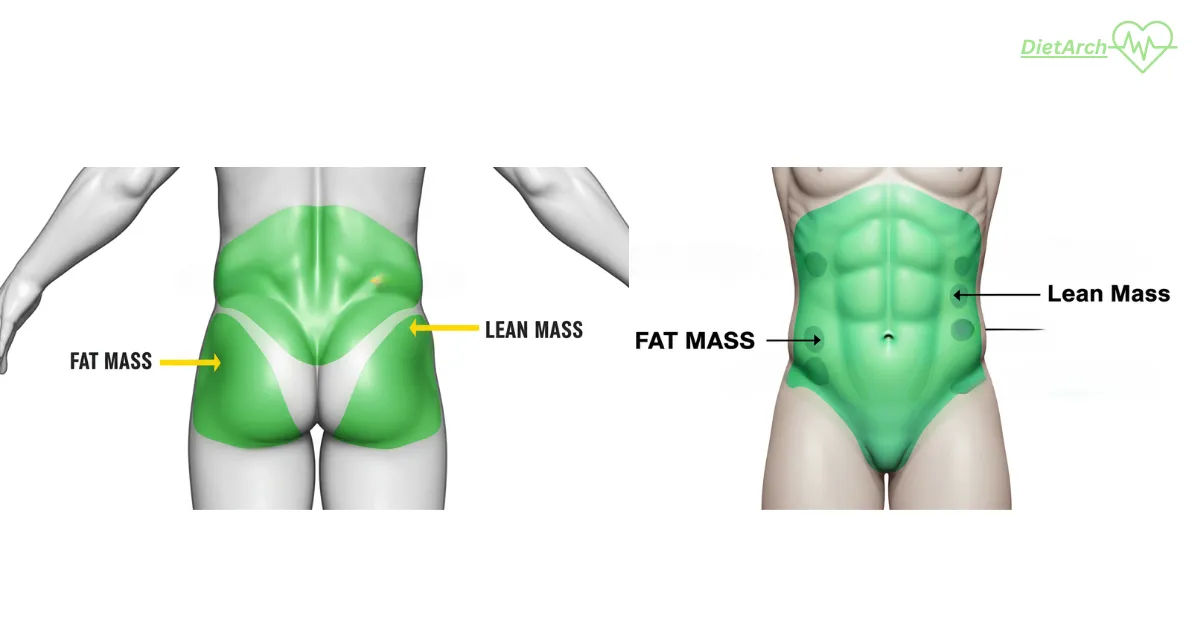
Body fat percentage is the share of your total body weight that is fat. Everything else, muscle, bone, water and organs, counts as lean mass.
The split matters because health and appearance follow the fat share, not the scale weight. Two people can both weigh 80 kg and look completely different if one carries 12% fat and the other carries 28%.
Your result also converts into two practical numbers. Fat mass equals your body fat percentage as a decimal multiplied by your weight, so at 20% body fat and 80 kg, fat mass is 0.20 x 80 = 16 kg. Lean mass is everything left over, 64 kg in this example, and protecting it is the real goal of any fat loss plan.
Essential Fat vs Storage Fat
Essential fat lives inside your organs, bone marrow, nerves and cell membranes. Your body cannot function without it, and it supports hormone production, temperature control and vitamin absorption.
Storage fat sits under the skin (subcutaneous fat) and around the organs (visceral fat). Visceral fat is the depot linked most strongly to disease risk, which is why waist size features in so many of the formulas below.
Body Fat Percentage vs BMI
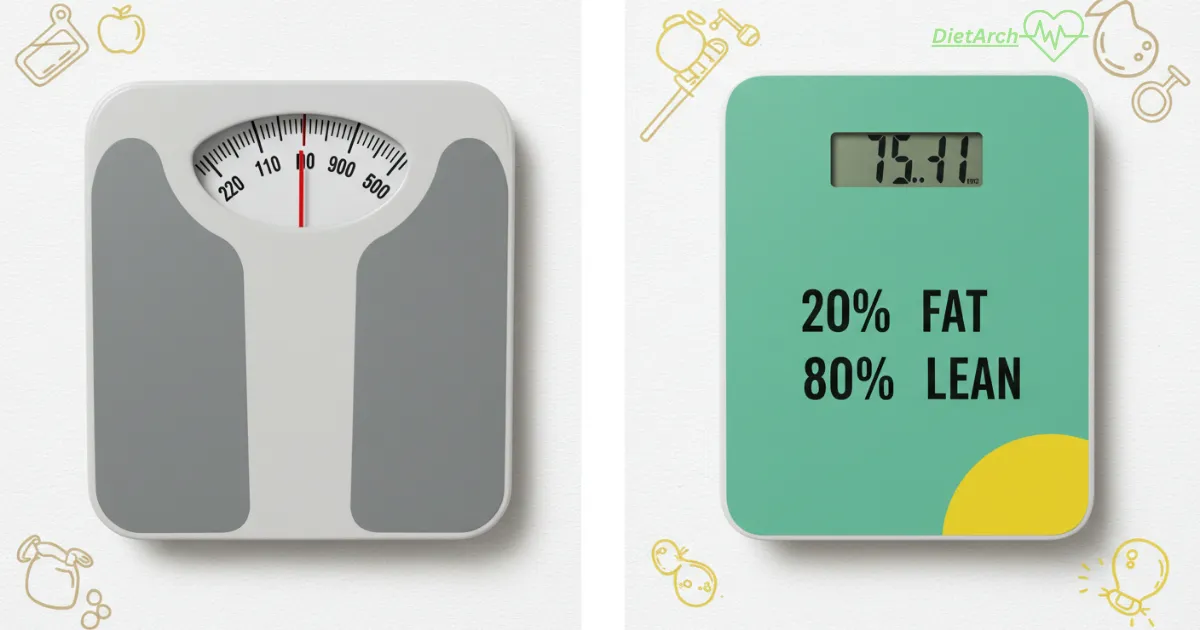
BMI uses only height and weight, so it cannot separate muscle from fat. A muscular athlete can score "overweight" on BMI while sitting at 12% body fat, and a low-muscle person can score a normal BMI with a high fat percentage.
Neither number tells the whole story on its own. Run your height and weight through our BMI calculator as well, and read the two results together.
The 5 Methods This Calculator Uses
Every body fat calculator is built on one or more estimation formulas, and each formula has strengths and blind spots. Four of the methods below run inside the tool above.
The Covert Bailey method and the BMI estimate are printed as worked formulas, so nothing on this page is a black box. Each method lists the equipment you need, the exact formula and its realistic accuracy.
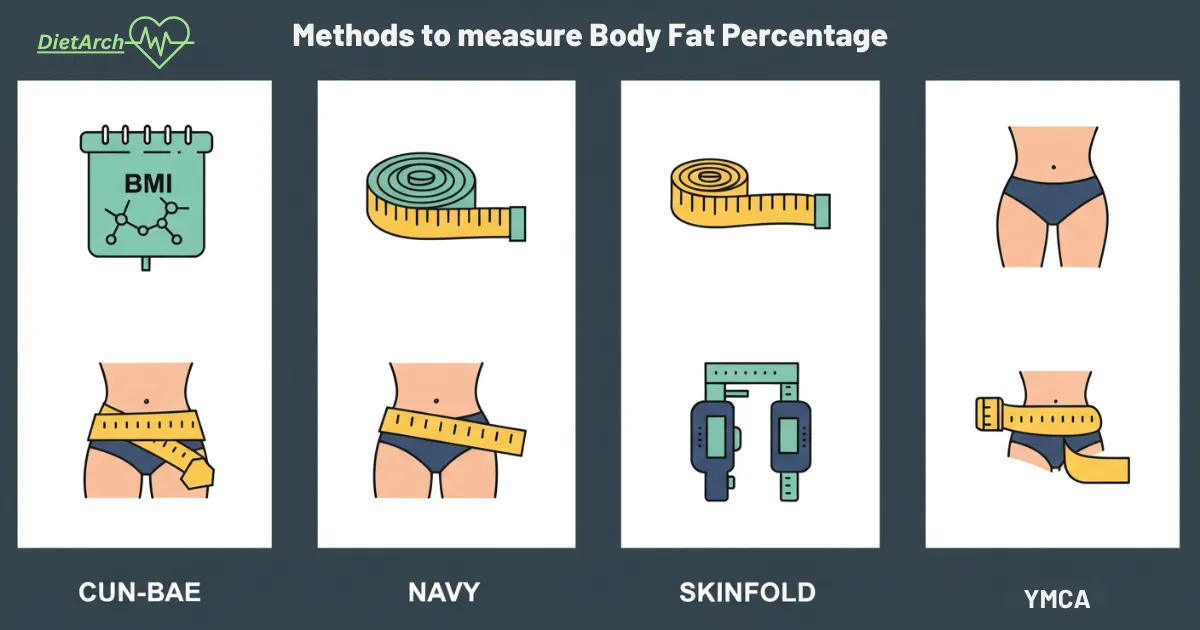
U.S. Navy Method
The Navy method is the most practical tape measure method available. It was developed for the U.S. Navy by Hodgdon and Beckett in 1984 and remains the U.S. military field standard.
Measure these points carefully, because small tape errors move the result:
The formulas below use inches and log base 10:
- Men: BF% = 86.010 x log10(waist - neck) - 70.041 x log10(height) + 36.76
- Women: BF% = 163.205 x log10(waist + hip - neck) - 97.684 x log10(height) - 78.387
Women add a hip measurement because female fat storage concentrates at the hips. Without it, the regression badly underestimates women's body fat.
Measured carefully, the Navy method lands within plus or minus 3-4 percentage points of a DEXA scan for most adults. The Navy tab of this body fat calculator accepts centimetres too and converts them for you.
CUN-BAE Method
CUN-BAE needs no tape measure and no calipers. It estimates body fat from your BMI, age and sex alone.
Researchers at the Clinica Universidad de Navarra in Spain built the equation, published it in the International Journal of Obesity in 2011, and validated it for clinical use in Diabetes Care in 2012. Here is the full equation, with sex coded as 0 for men and 1 for women:
BF% = -44.988 + (0.503 x age) + (10.689 x sex) + (3.172 x BMI) - (0.026 x BMI squared) + (0.181 x BMI x sex) - (0.02 x BMI x age) - (0.005 x BMI squared x sex) + (0.00021 x BMI squared x age)
Many readers search for this method under the spelling "Cun Bae calculator". It is the same CUN-BAE formula, and the name is short for Clinica Universidad de Navarra Body Adiposity Estimator.
CUN-BAE was developed and validated in adults across a wide age span, including older adults. It is not designed for children or adolescents, whose body composition changes too fast for adult equations.
Covert Bailey Method
The Covert Bailey method comes from Covert Bailey's book The Ultimate Fit or Fat, first published in 1999. Almost no major calculator site explains it, which is a shame, because it uses limb measurements that other tape methods ignore.
You need five measurements, all in inches: waist, hips, forearm at its widest point, wrist at its narrowest point, plus thigh and calf for women. The formula changes by sex and by age band, with one set for age 30 and under and another for over 30.
- Men, 30 or younger: BF% = Waist + 0.5 x Hips - 3 x Forearm - Wrist
- Men, over 30: BF% = Waist + 0.5 x Hips - 2.7 x Forearm - Wrist
- Women, 30 or younger: BF% = Hips + 0.8 x Thigh - 2 x Calf - Wrist
- Women, over 30: BF% = Hips + Thigh - 2 x Calf - Wrist
Measure the thigh and calf at their widest points, the forearm at its widest point, and the wrist just above the wrist bone. With careful measuring, expect accuracy around plus or minus 4-5 percentage points.
Worked by hand, it takes about two minutes and makes an excellent cross-check on a Navy result from this body fat calculator. If the two tape methods agree within a few points, you can trust the trend they show.
Jackson-Pollock Caliper Method
The caliper method measures subcutaneous fat directly by pinching skinfolds at set points on the body. Jackson and Pollock published the equations in 1978, and they remain the reference standard for skinfold testing.
The 3-site protocol uses different sites by sex:
- Men: chest, abdomen and thigh.
- Women: triceps, suprailiac (just above the hip bone) and thigh.
The tool lists five skinfold fields because it covers both sets of sites; enter the three that match your sex. The body fat calculator sums your three skinfolds, converts the sum into body density, and then into a body fat percentage using the Siri equation.
Technique decides accuracy here. Pinch a clean fold of skin and fat away from the muscle, place the caliper about 1 cm from your fingers, take each site twice and average the readings, and use the same tester every time.
With a skilled tester, calipers match the Navy method for accuracy. In untrained hands the error grows quickly, which is why most home users get steadier numbers from a tape measure.
YMCA Method
The YMCA method is the fastest estimate in this body fat calculator. It needs only two inputs: your waist circumference and your body weight.
The formulas come from YMCA fitness testing research associated with Golding and colleagues. Waist goes in inches and weight in pounds:
- Men: BF% = ((4.15 x waist in inches) - (0.082 x weight in lbs) - 98.42) / weight in lbs x 100
- Women: BF% = ((4.15 x waist in inches) - (0.082 x weight in lbs) - 76.76) / weight in lbs x 100
A modified YMCA version for women adds hip, wrist and forearm measurements and usually lands closer to the Navy result. It exists because a single waist reading cannot see how a woman's fat is distributed.
Treat the basic YMCA result as a quick first check rather than your main tracking method. It is handy when you have a scale and a tape but only thirty seconds.
BMI Estimate Method
The BMI estimate is the roughest option on this page, included for readers who have no tape measure and no calipers. It predicts body fat from BMI and age using the Deurenberg formula:
- Men: BF% = 1.20 x BMI + 0.23 x age - 16.2
- Women: BF% = 1.20 x BMI + 0.23 x age - 5.4
The formula assumes an average build, so it misreads muscular people, very lean people and anyone whose fat distribution is unusual. Use it as a starting guess only, then confirm with a tape method.
Earlier versions of this page printed the Navy formulas under this heading by mistake. Those log formulas now sit in the Navy section above, where they belong.
How Accurate Are Body Fat Calculators?
No home method matches the laboratory reference standards. DEXA scans and hydrostatic (underwater) weighing set the benchmark, and every formula method carries an error range around them.
| Method | Equipment | Typical error vs DEXA | Best for |
|---|---|---|---|
| U.S. Navy | Tape measure | Plus or minus 3-4 points | Most adults measuring at home |
| Jackson-Pollock calipers | Skinfold calipers | Plus or minus 3-4 points with a skilled tester | Lean to average builds |
| Covert Bailey | Tape measure | Plus or minus 4-5 points | Cross-checking a Navy result |
| YMCA | Tape measure and scale | Plus or minus 4-5 points | A fast first estimate |
| CUN-BAE | None (height, weight, age, sex) | Widest margin of the formula methods | No tape or calipers available |
| BMI estimate | None | Widest margin | A rough starting guess |
Two honest conclusions follow from the table. First, no online body fat calculator gives an exact reading, and any page promising near-perfect accuracy is selling you something.
Second, the trend matters far more than any single reading. Pick one method, repeat it under the same conditions every few weeks, and judge your progress by the direction of the numbers, not by one result.
How to Measure Correctly and Avoid Errors
Even the best body fat calculator fails on sloppy measurements. Most of the error in home results comes from the tape, not from the formula.
- Measure in the morning, after the bathroom and before breakfast, when your body is in its most repeatable state.
- Measure before exercise, never after. Exercise raises blood flow to the skin and shifts both tape and skinfold readings. The old advice to take skinfolds after a workout was wrong.
- Keep conditions identical. Same time of day, same hydration, same tape position, same clothing state (bare skin is best).
- Keep the tape level and snug. It should sit flat all the way around without indenting the skin, and you should breathe normally without pulling your stomach in.
- Measure twice and average. If two waist readings differ by more than half an inch, take a third and average the closest two.
Why Body Fat Matters for Health
Carrying too much storage fat, especially visceral fat packed around the organs, is linked to type 2 diabetes, heart disease and a higher risk of stroke. Excess body fat is also associated with insulin resistance and hormonal disruption, and in women with conditions such as polycystic ovary syndrome (PCOS).
Too little fat is a problem as well. Below the essential fat range, hormone production, immune function, fertility and bone health all suffer.
The goal is not the lowest number you can reach. The goal is a result inside the healthy band for your age and sex, held there over time.
How to Reduce Body Fat Safely
Fat loss works when the basics stay boring and consistent. These are the levers that move the number this body fat calculator reports:
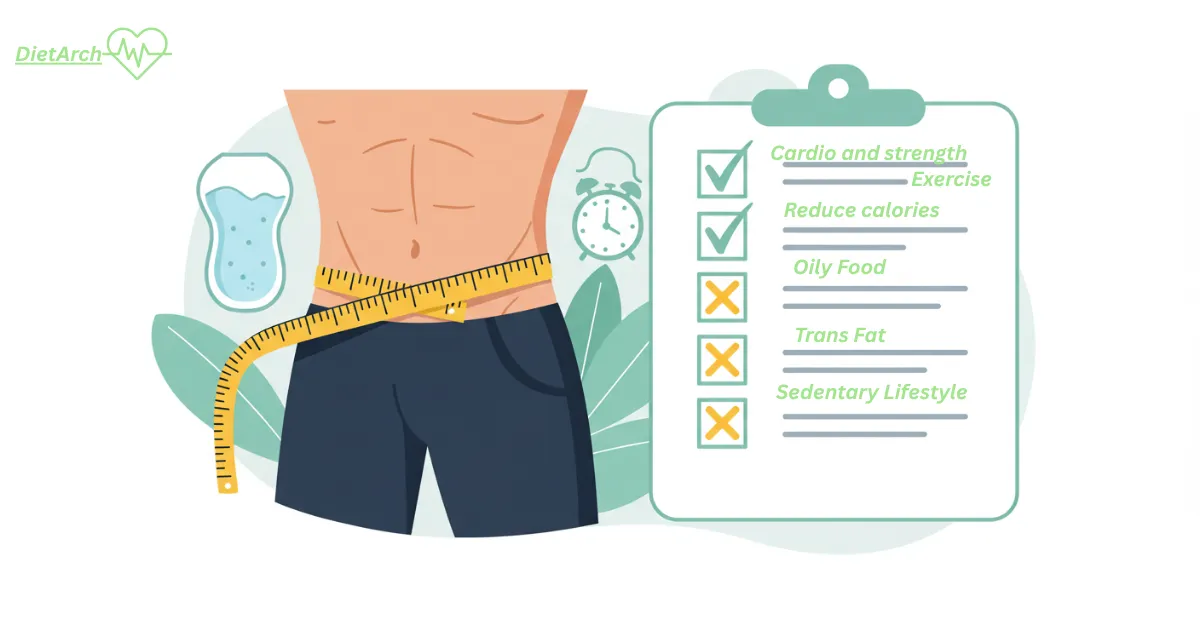
Check your percentage again every 2-4 weeks rather than every few days. Short-term readings mostly reflect water, not fat.
In a Nutshell
A body fat calculator gives you an estimate, not a lab result, and that is fine for tracking real change. The Navy and caliper methods are the most accurate home options, CUN-BAE and Covert Bailey fill the gaps other sites ignore, and every method works best as a trend measured under identical conditions.
Pair this page with our ideal body weight calculator to set a target weight, then use the health tools and calculators hub to find every other free tool on the site. Measure again in a few weeks and let the trend, not a single number, judge your progress.