Low-Carb Fruits Ranked from Lowest to Highest Net Carbs
Avocado is the lowest carb fruit you can eat, at 1.8 g of net carbs per 100 g, and berries take most of the next spots. This ranked chart of low carb fruits puts every value on the same USDA basis so the order is finally honest. You get net carbs per typical serving and per 100 g, side by side.
Low carb fruits are not about cutting fruit out. They are about knowing which fruits fit your daily budget and which ones quietly spend it all. Skim the chart, check the budget table for your carb target, then read the per-fruit notes for the ones you actually eat.
The Ranked Chart: Low Carb Fruits by Net Carbs
The ranking below runs from lowest to highest net carbs per 100 g. Serving values use one defined typical serving per fruit, because nobody eats 100 g of lemon. Both bases come from USDA data.
| Rank | Fruit | Typical serving | Total carbs (serving) | Fiber (serving) | Net carbs (serving) | Net carbs (per 100 g) |
|---|---|---|---|---|---|---|
| 1 | Avocado | 1/2 fruit (100 g flesh) | 8.5 g | 6.7 g | 1.8 g | 1.8 g |
| 2 | Tomato | 1 medium (123 g) | 4.8 g | 1.5 g | 3.3 g | 2.7 g |
| 3 | Olives | 10 olives (30 g) | 1.8 g | 1.0 g | 0.9 g | 2.9 g |
| 4 | Starfruit | 1 medium (91 g) | 6.1 g | 2.5 g | 3.6 g | 3.9 g |
| 5 | Blackberries | 1/2 cup (72 g) | 6.9 g | 3.8 g | 3.1 g | 4.3 g |
| 6 | Raspberries | 1/2 cup (62 g) | 7.4 g | 4.0 g | 3.3 g | 5.4 g |
| 7 | Strawberries | 1 cup sliced (166 g) | 12.7 g | 2.9 g | 9.8 g | 5.7 g |
| 8 | Coconut (fresh meat) | 1/2 cup shredded (40 g) | 6.1 g | 3.6 g | 2.5 g | 6.2 g |
| 9 | Lemon | 1 fruit (58 g) | 5.4 g | 1.6 g | 3.8 g | 6.5 g |
| 10 | Watermelon | 1 cup diced (152 g) | 11.5 g | 0.6 g | 10.9 g | 7.2 g |
| 11 | Cantaloupe | 1 cup cubed (160 g) | 13.1 g | 1.4 g | 11.7 g | 7.3 g |
| 12 | Lime | 1 fruit (67 g) | 7.0 g | 1.9 g | 5.2 g | 7.7 g |
| 13 | Peach | 1 medium (150 g) | 14.3 g | 2.3 g | 12.0 g | 8.0 g |
| 14 | Grapefruit | 1/2 fruit (123 g) | 13.2 g | 2.0 g | 11.2 g | 9.0 g |
| 15 | Orange | 1 medium (131 g) | 15.4 g | 3.1 g | 12.3 g | 9.4 g |
| 16 | Plum | 1 fruit (66 g) | 7.5 g | 0.9 g | 6.6 g | 10.0 g |
| 17 | Kiwi | 1 fruit (69 g) | 10.1 g | 2.1 g | 8.1 g | 11.7 g |
| 18 | Blueberries | 1/2 cup (74 g) | 10.7 g | 1.8 g | 9.0 g | 12.1 g |
A printable version of this chart is the fastest way to shop from it. Save it to your phone or print it for the fridge. Portions still matter more than rankings once you leave the top six.
What Net Carbs Mean (and the US vs UK Label Trap)
Net carbs are total carbohydrates minus fiber. Your body does not digest fiber into glucose, so fiber grams do not raise blood sugar the way starch and sugar do. That subtraction is why high-fiber fruits punch above their total carb numbers.
Here is the trap almost nobody explains. UK and EU labels already list carbohydrates with fiber removed, so the carb figure on a British label is already net. Subtracting the fiber line again double-counts and understates your intake.
US labels work the other way, listing total carbs with fiber inside. If you shop in the US, subtract fiber yourself. If you shop in the UK or EU, take the printed carb number as it is.
Every ranking on this page uses net carbs, because net carbs are the fairest way to judge low carb fruits.
The 18 Lowest Carb Fruits, Ranked
Here the 18 low carb fruits get their individual notes, in the same order as the chart. Each entry gives the number that matters and the portion that keeps it honest.
1. Avocado
Avocado tops every serious list of low carb fruits for a simple reason: 1.8 g net carbs per 100 g, with 6.7 g of fiber doing the work. Half an avocado adds healthy fats and potassium to any meal for under 2 g of net carbs. Read our full guide to avocado benefits and nutrition for portions, storage, and ripening tips.
2. Tomato
Yes, the tomato is a fruit, and at 2.7 g net carbs per 100 g it is a keto staple hiding in the salad bowl. A medium tomato costs about 3.3 g net, less than most people assume. Cherry tomatoes make the easiest low carb snack swap for crisps and crackers.
3. Olives
Olives are botanically fruits and practically free food on keto, at about 2.9 g net carbs per 100 g. Ten olives come to under 1 g of net carbs. Their salt and fat also help with the electrolyte dip many people feel in the first keto weeks.
4. Starfruit
Starfruit (carambola) lands at 3.9 g net carbs per 100 g, far lower than its tropical image suggests. One medium fruit is about 3.6 g net, with a crisp apple-citrus bite. One caution: people with kidney disease should avoid starfruit, because its oxalic acid and neurotoxin are not cleared well by damaged kidneys.
5. Blackberries
Blackberries pack 4.3 g net carbs per 100 g and the most fiber of any common berry. Half a cup gives you 3.1 g net with 3.8 g of fiber. They also anchor our guide to high fiber fruits for gut health, which ranks fruit by fiber instead of carbs.
6. Raspberries
Raspberries sit at 5.4 g net carbs per 100 g, and half a cup is just 3.3 g net. Their fiber (6.5 g per 100 g) is why they satisfy out of proportion to their carb cost. Fresh and unsweetened frozen raspberries carry identical values, so buy whichever is cheaper.
7. Strawberries
Strawberries measure 7.7 g total carbs per 100 g, which is 5.7 g net. Be careful with servings: a full cup of sliced strawberries (166 g) is 12.7 g total and 9.8 g net, not the 7 g figure often quoted. That same cup also covers roughly your full daily vitamin C target, which is the honest version of the claim this page used to make.
8. Coconut
Fresh coconut meat looks carby at 15.2 g total per 100 g, until its 9.0 g of fiber brings the net down to 6.2 g. Half a cup of shredded coconut is only 2.5 g net. Use fresh or unsweetened shredded coconut, because sweetened flakes add sugar that changes the math completely.
9. Lemon
A whole lemon holds about 3.8 g net carbs, and nobody eats a whole lemon. In real use, lemon is a near-zero carb flavoring for water, dressings, and fish. It earns its rank because it makes every other food on this list taste better for almost no budget.
10. Watermelon
Watermelon is 7.2 g net carbs per 100 g, so the fruit itself is not the problem. Portion is: one cup of diced watermelon is about 10.9 g net, a third of a loose keto day. A small wedge with a meal fits most budgets; an all-you-can-eat watermelon afternoon does not.
11. Cantaloupe
Cantaloupe lands beside watermelon at 7.3 g net carbs per 100 g. A cup cubed runs about 11.7 g net, so treat it as a measured dessert, not a free snack. Pairing melon with salty cheese or prosciutto slows the sugar hit and makes a smaller portion feel complete.
12. Lime
Lime mirrors lemon at 7.7 g net carbs per 100 g, and a whole lime is about 5.2 g net. In practice it seasons food in teaspoons, so its real cost per meal is close to zero. Lime is the base of guacamole and ceviche, two dishes low carb eaters lean on heavily.
13. Peach
A medium peach (150 g) holds about 14 g total carbs and 12.0 g net, which puts peaches in the occasional category. On a 50 g low carb day, half a peach is an easy fit. Grilling peach halves concentrates the flavor so a smaller portion satisfies.
14. Grapefruit
Half a grapefruit is about 11.2 g net carbs, with a fiber and water profile that makes it more filling than its numbers suggest. It suits low carb days better than strict keto days. One safety note: grapefruit interacts with several common medications, including some statins and blood pressure drugs, so check with your pharmacist if you take daily medication.
15. Orange
Oranges were the most wrong numbers on the old version of this page, so here are the corrected ones: 11.8 g total carbs, 2.4 g fiber, 9.4 g net per 100 g. A medium orange is about 12.3 g net. Eat the fruit rather than drinking the juice, because juicing strips the fiber that keeps the net count honest.
16. Plum
One plum is a built-in portion: about 7.5 g total carbs and 6.6 g net per fruit. At 10.0 g net per 100 g it is mid-table, but the single-fruit serving keeps real-world intake low. Plums are the easiest fruit on this list to fit into a 30 g day without weighing anything.
17. Kiwi
Kiwi sits at 11.7 g net carbs per 100 g, and one fruit is about 8.1 g net. It earns its place with vitamin C and the actinidin enzyme that aids protein digestion. On strict keto it is a garnish; on a 50 g day it is a fair dessert.
18. Blueberries (Watch List)
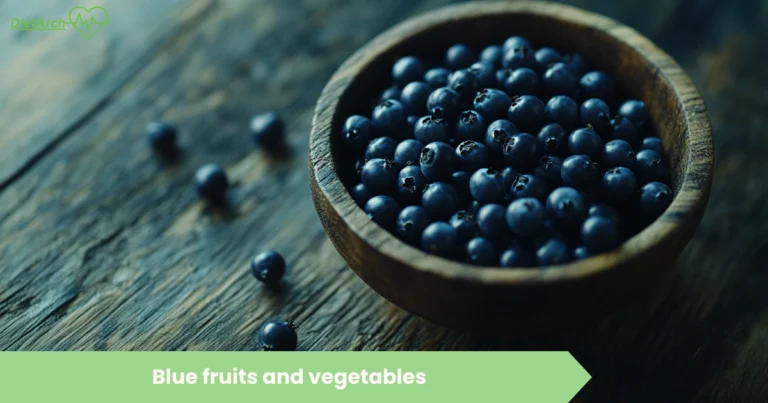
Blueberries are the highest entry here at 12.1 g net carbs per 100 g, which is why they sit on the watch list rather than the honor roll. Half a cup is about 9.0 g net, too much for daily strict keto but fine for low carb. Their anthocyanin load is genuinely exceptional, as our guide to blue fruits and vegetables shows, so portion them rather than banning them.
How Much Fruit Fits a 20 g, 30 g and 50 g Carb Day
Rankings only help if they translate into a day of eating. These budgets reserve most of your carbs for vegetables and meals, then show what fruit fits on top. Use them to plan how the low carb fruits in the chart fit your actual target.
| Daily net carb target | Fruit budget | Example fruit day | Fruit net carbs |
|---|---|---|---|
| 20 g (strict keto) | About 6 g | 1/2 avocado (1.8 g) + 1/2 cup raspberries (3.3 g) + lemon in water (about 1 g) | About 6 g |
| 30 g (moderate keto) | About 11 g | 1/2 avocado (1.8 g) + 1/2 cup blackberries (3.1 g) + 1 plum (6.6 g) | About 11.5 g |
| 50 g (low carb) | About 20 g | 1 cup strawberries (9.8 g) + 1/2 avocado (1.8 g) + 1 kiwi (8.1 g) | About 20 g |
Notice the pattern: berries plus avocado fit every budget on this page. The stone fruits and citrus join at 30 g and above. If you track macros precisely, our macro calculator turns these budgets into full daily targets.
Fruits to Limit or Avoid on Keto
These fruits are not unhealthy. They are simply too sugar-dense for a ketogenic budget, and readers ask about them more than any others. None of them count as low carb fruits at normal portions.
| Fruit | Serving | Net carbs | Why it breaks the budget |
|---|---|---|---|
| Banana | 1 medium | About 24 g | One fruit can exceed a whole 20 g day |
| Grapes | 1 cup | About 26 g | 17 to 18 g net per 100 g, and very easy to overeat |
| Mango | 1 cup sliced | About 22 g | Tropical sugar density, large natural servings |
| Pineapple | 1 cup chunks | About 20 g | Sweet per bite with modest fiber |
| Cherries | 1 cup | About 19 g | Small fruit, fast eating, high totals |
| Raisins and dried fruit | 1 small box (43 g) | About 28 g | Water removed, sugar concentrated |
| Orange juice | 1 cup | About 24 g | Fiber stripped out, sugar kept in |
Grapes deserve one extra line because the question comes up so often. The fruit is fine; the handful habit is not. Weigh a cup once and you will understand why grapes end keto days.
Low-Carb Fruits for Diabetes
The old title of this page promised help for diabetes and never delivered it, so here is the section properly. Most people managing blood sugar do well with the top half of these low carb fruits, because fiber and modest sugar loads blunt glucose response. Berries are the standard recommendation for a reason.
Three habits make fruit safer on a diabetic plan. Eat fruit with protein or fat, such as berries with Greek yogurt, rather than alone.
Keep portions to one serving and spread them across the day instead of eating them in one sitting. Choose whole fruit over juice every time, because the fiber is the mechanism that slows absorption.
This is general information, not medical advice for your situation. If you use insulin or glucose-lowering medication, agree your fruit portions with your care team before changing your pattern.
Tips for Adding Low-Carb Fruit Without Breaking Your Budget
Weigh your fruit portions for one week. After seven days of weighing berries and melon, your eye learns the portions and the scale can go back in the drawer. Accurate portions are what make low carb fruits work in real life.
Build plates around the top six fruits and treat the rest as rotating guests. Avocado, tomato, olives, starfruit, blackberries, and raspberries cover breakfasts, salads, snacks, and desserts between them.
Watch the sweetened traps. Sweetened frozen fruit, canned fruit in syrup, and dried fruit with added sugar are different foods from their fresh versions, with different numbers. The chart above lists fresh low carb fruits only, for exactly that reason.
Nutrition data: USDA FoodData Central.
Frequently Asked Questions
Author: Sara Ali, nutritionist. This article is general information, not medical advice.